The Azure Legacy: A Masterclass in the History and Allure of the Hope Diamond
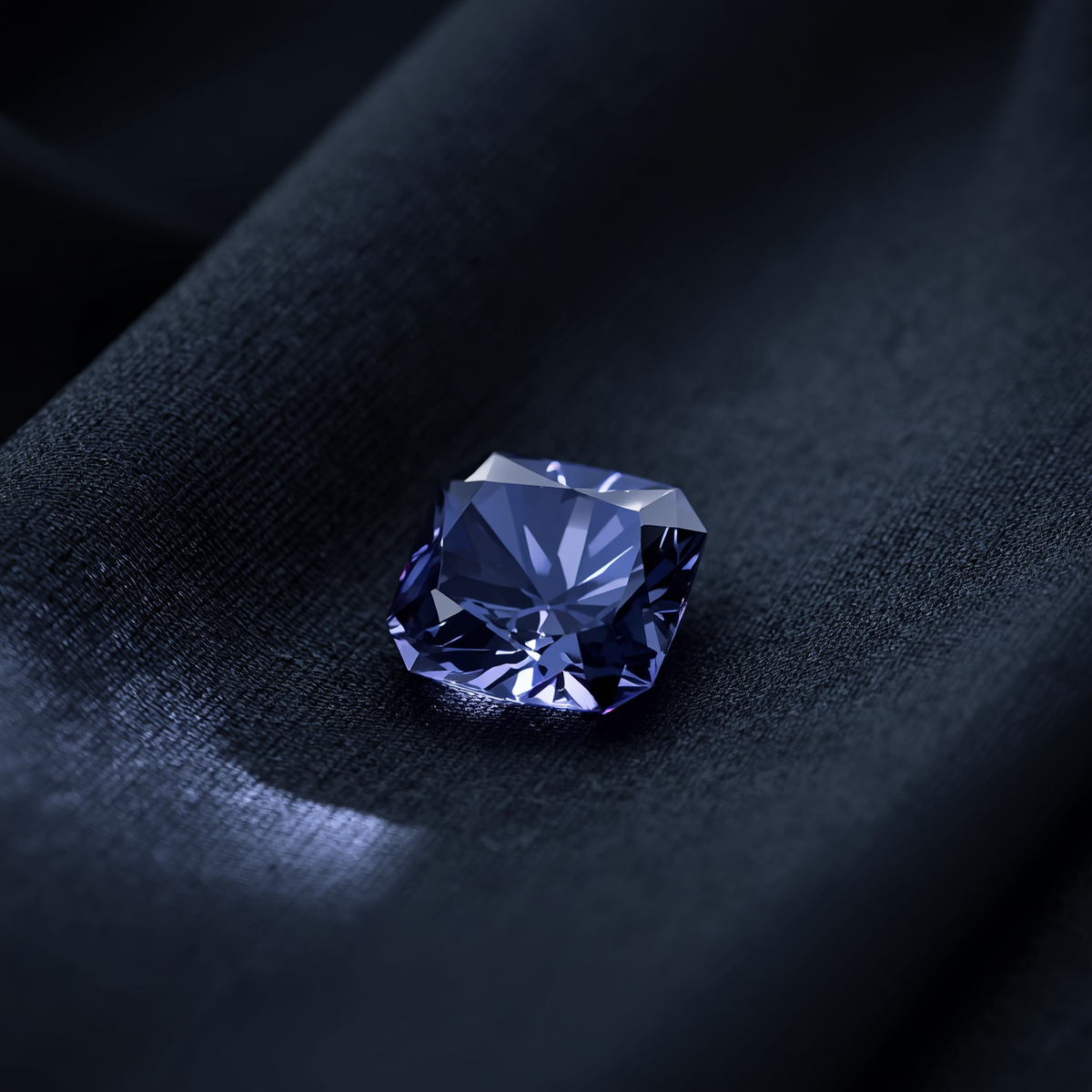
T here is a specific, heavy silence that falls when one stands before the glass at the Smithsonian. Behind it sits 45.52 carats of impossible geometry, a stone that seems to swallow the light and breathe it back out as a deep, oceanic indigo. To hold the image of the Hope Diamond in one’s mind is to touch the intersection of geological miracle and human obsession.
At Veyrael, we believe that understanding the soul of a gemstone is as vital as grading its clarity. The Hope Diamond is more than a world-famous artifact; it is a case study in provenance, rarity, and the enduring value of colored diamonds. Whether you are a seasoned collector or a first-time investor in fine jewelry, the saga of this “steely-blue” wonder offers essential lessons in what makes a gemstone truly priceless.
The Birth of a Legend: From Kollur to the Crown
The story begins in the dust and heat of the 17th century. Imagine the rough, grit-laden earth of the Kollur mine in Golconda, India. It was here that a French merchant traveler named Jean Baptiste Tavernier first encountered a massive, 112-carat stone. In its raw form, Tavernier didn’t see the “Dark Blue” we recognize today; he described it as a “beautiful violet,” a testament to how the play of light in a rough stone can mask its ultimate potential.
This is the first lesson for any jewelry enthusiast: the transformative power of the cut.
In 1668, Tavernier sold this violet giant to King Louis XIV. By 1673, the court jeweler had reimagined the stone, recutting it into a 67-carat masterpiece that became known as the “French Blue”. It was described as having an intense, “steely-blue” hue—a color so rare that it became a symbol of the French monarchy’s absolute power.
A Disappearing Act: The Theft and Resurfacing
Jewelry is often a mirror of history’s most turbulent moments. During the looting of the French Revolution in 1792, the “French Blue” vanished into the shadows. For years, it was a ghost.
When a blue diamond of approximately 44 carats surfaced in London in 1813, owned by jeweler Daniel Eliason, the whispers began. Evidence eventually confirmed that this was indeed the recut “French Blue,” a smaller, stealthier version of its former self. It passed through the hands of King George IV of England, but upon his death, the stone was sold to liquidate his massive debts.
This era of the diamond’s life highlights a crucial factor for modern buyers: the importance of documented history. In the world of high-end jewelry, a gap in a stone’s lineage can be the difference between a secure investment and a risky purchase. Always demand a clear chain of custody for any heritage piece.
The “Hope” and the Haunting Lore
In 1839, the diamond found its namesake when it entered the collection of Henry Philip Hope. It is here that the legend of the “Hope Diamond Curse” truly took root. While the Hopes were once a family of immense wealth, the family eventually faced bankruptcy—a downfall the public was quick to blame on the stone.
The narrative of the curse followed the diamond into the 20th century. When Pierre Cartier sold the Hope to Washington mining heiress Evalyn Walsh McLean in 1910, she famously wore it as a good-luck charm. However, the tragedies that followed her were undeniable: the death of her young son in a car accident, her daughter’s suicide, and her husband’s eventual confinement to a mental institution.
While Veyrael approaches the “curse” with a healthy dose of editorial skepticism, the emotional weight of these stories is undeniable. From a consumer perspective, this reminds us that jewelry is an emotional investment. The stories we attach to our pieces—whether of luck or legacy—are what give them life beyond their mineral composition.
For a broader understanding of diamond heritage, explore The Eternal Brilliance: A Master Guide to Diamond History, Symbolism, and Curation.| The Hope Diamond by the Numbers: | Detail | Specification |
|---|---|---|
| Weight | 45.52 carats | 45.52 carats |
| Clarity | VS1 (Very Slightly Included) | VS1 (Very Slightly Included) |
| Color | Dark Blue | Dark Blue |
| Dimensions | 25.60 mm long by 21.78 mm wide | 25.60 mm long by 21.78 mm wide |
| Setting | Surrounded by a halo of 16 white diamonds, with an additional 45 white diamonds adorning the chain. | Surrounded by a halo of 16 white diamonds, with an additional 45 white diamonds adorning the chain. |
Modern Excellence: The Harry Winston Era and Beyond
In 1949, the legendary jeweler Harry Winston purchased the Hope Diamond from the McLean estate. Rather than hoarding its beauty, Winston toured the stone globally for ten years, using its fame to raise money for charity. In 1958, he made a move that cemented the stone’s legacy: he donated it to the Smithsonian Institution.
Interestingly, since the stone moved into the public trust, its “curse” seems to have vanished. It has become the Smithsonian’s most popular artifact, drawing millions of visitors who seek to catch a glimpse of that famous blue fire.
Buying Guide: How to Invest in Rare Blue Gemstones
- Understand the “Depth” of Color. The Hope Diamond is prized for its “Dark Blue” saturation. When buying colored gemstones—whether sapphires, blue diamonds, or tanzanite—look for a balance between saturation and brilliance. You want a stone that feels deep and “velvety” rather than “inky” or “flat.”
- Clarity Matters (But Cut is King). At a VS1 clarity, the Hope Diamond is exceptionally clean to the naked eye. However, even a stone with inclusions can be breathtaking if the cut is executed properly. The way the Hope was recut over centuries shows how a skilled lapidary can maximize a stone’s “fire” and color.
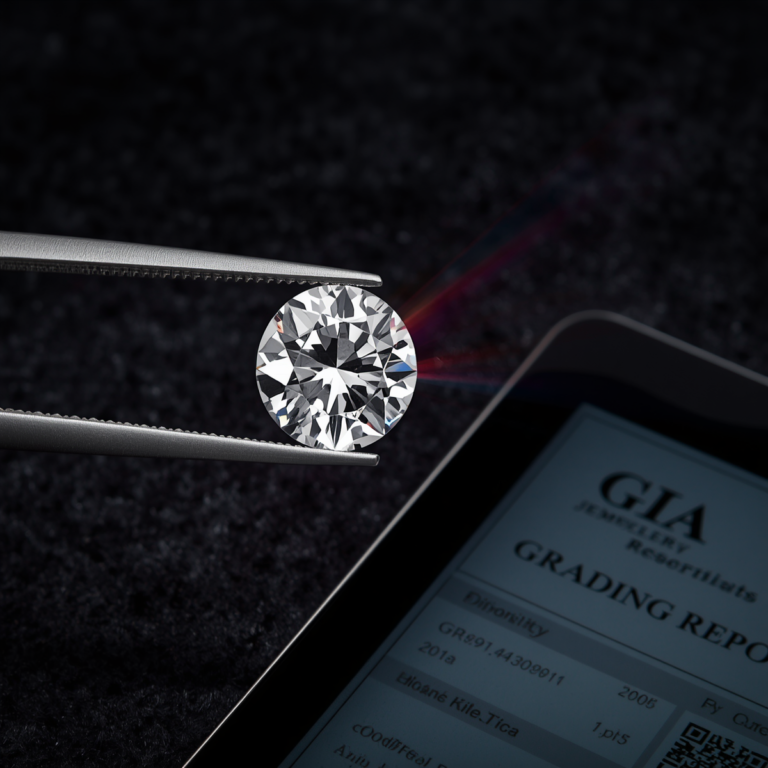
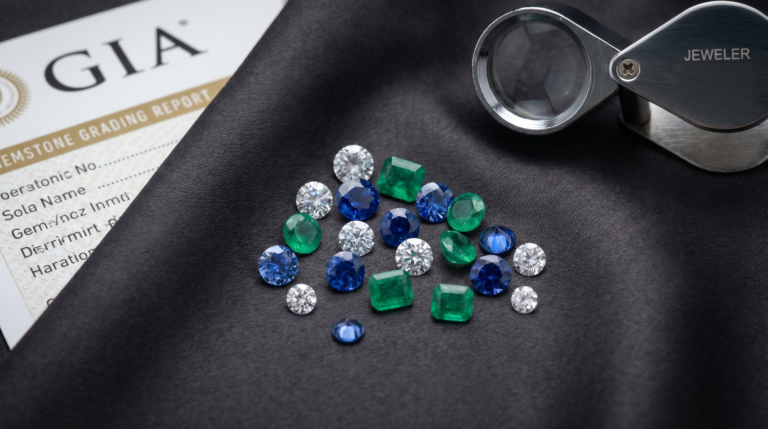
- Seek Expert Grading. Never purchase a significant gemstone without a report from a reputable laboratory like the GIA. A professional grading will confirm whether a diamond’s blue color is natural or the result of high-pressure, high-temperature (HPHT) treatments.
FAQ: Frequently Asked Questions About the Hope Diamond
-
Where is the Hope Diamond located now?
It is currently on permanent display at the Smithsonian National Museum of Natural History in Washington, D.C.. -
Is the Hope Diamond really cursed?
While the McLean and Hope families suffered significant misfortunes, the Smithsonian has reported no ill effects since taking ownership in 1958. Most historians view the “curse” as a marketing tool used by early 20th-century jewelers to add mystique to the stone. -
What causes the diamond’s blue color?
The blue hue is caused by trace amounts of boron atoms trapped within the carbon structure of the diamond.
Conclusion: The Enduring Azure
The Hope Diamond remains a pinnacle of the jewelry world because it perfectly balances science and story. It is a VS1, dark blue mineral marvel, yes—but it is also a survivor of revolution, theft, and tragedy.
As you curate your own collection, remember that the most beautiful pieces are those that offer a sense of sensory realism. The way a ring feels cool against your skin, the sharp click of a well-made clasp, and the way a stone catches the light as you move—these are the “tiny moments” that make jewelry a legacy.
Invest in quality, demand transparency, and perhaps one day, your own azure legacy will be passed down to those who will cherish its story as much as its shine.