The Titanium Truth: Why This Modern Metal is the New Standard in Luxury Jewelry
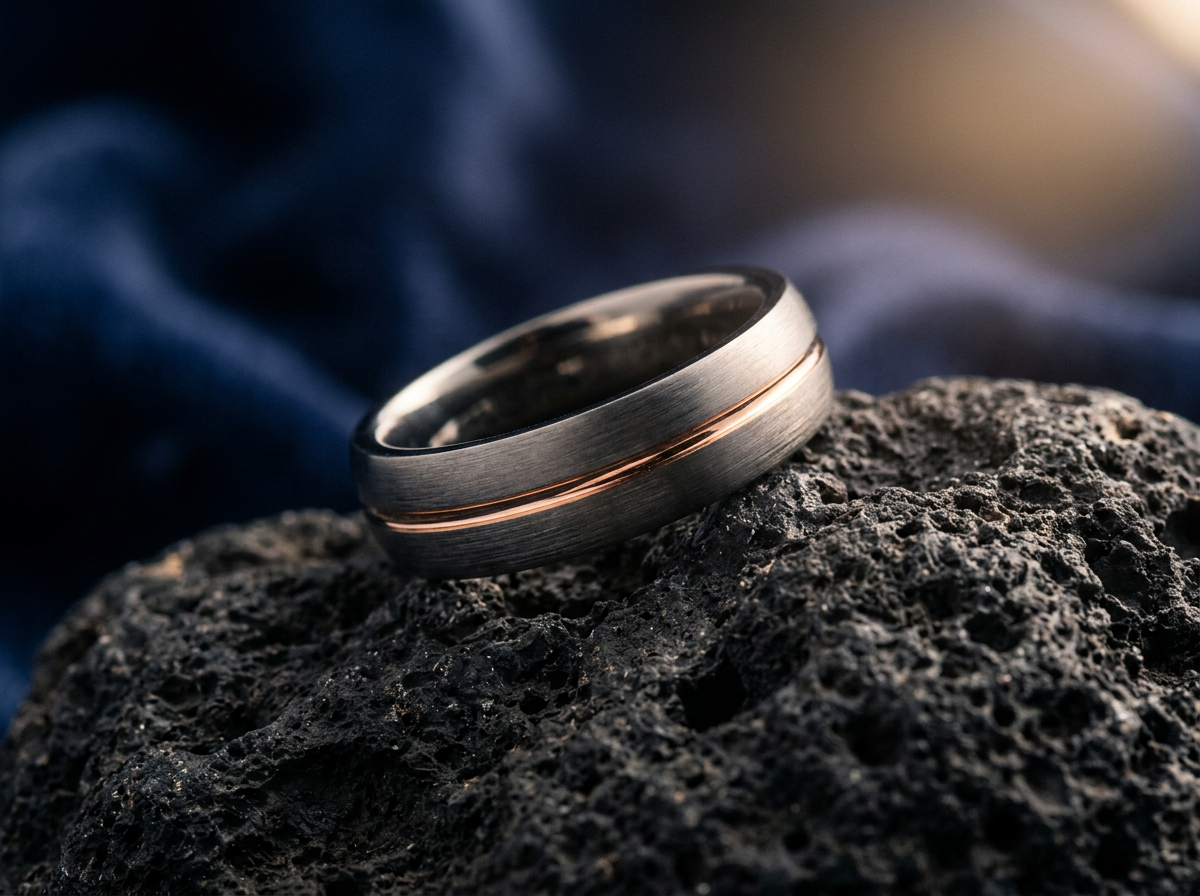
T here is a specific, startling moment that happens when a first-time collector picks up a titanium band. You expect the familiar, heavy anchor-drag of platinum or the dense warmth of 18k gold. Instead, the ring feels like a whisper against your palm-a cool, silken weight that seems to defy the laws of physics. It is this very lightness that has fueled decades of urban legends, leading many to wonder: Is something this light actually durable? Can it ever be resized? And if an emergency strikes, is your finger truly at risk?
For the discerning jewelry enthusiast, titanium represents a fascinating intersection of 18th-century chemistry and 21st-century minimalism. At Veyrael, we believe luxury is defined by informed choices. Today, we are stripping away the “industrial” label to reveal why titanium is becoming the preferred choice for those who value both resilience and refined aesthetics.
| Aspect | Common Belief | What the Article Explains |
|---|---|---|
| Durability | “Is something this light actually durable?” | Titanium’s strength comes from high-performance alloys like 6Al4V. |
| Resizing | “It is physically impossible to resize titanium.” | Titanium can be resized by specialists using precision machining. |
| Safety | “Titanium rings cannot be cut off in emergencies.” | Medical tools can safely remove titanium rings when needed. |
The Alchemy of Strength: Beyond the Industrial Label
While many associate titanium with the roar of jet engines or the sleek hulls of spacecraft, its journey began in a much humbler setting: the Cornish soil of England in 1791. Discovered by an amateur chemist, the metal remained a scientific curiosity for over a century because it was notoriously difficult to extract from its ore.
In the jewelry world, we often speak of “pure” titanium, but the reality is more nuanced. Pure titanium (the kind found on the periodic table as Ti) is actually quite soft-comparable to the malleability of gold or silver. The “indestructible” reputation of titanium jewelry actually comes from high-performance alloys, most notably 6Al4V. This blend-consisting of 90% titanium, 6% aluminum, and 4% vanadium-transforms the metal into a powerhouse of tensile strength that can withstand the rigors of an active lifestyle without denting or deforming.
When you run your finger over a satin-finished titanium band, you aren’t just feeling metal; you are feeling a stable oxide layer that naturally protects the piece from salt water, chlorine, and the elements. It is a metal that doesn’t just sit on the skin; it survives with you.
In professional settings, titanium’s appeal extends beyond jewelry. Its use in aerospace and medical implants is not marketing—it reflects a material chosen for extreme performance, corrosion resistance, and long-term stability under stress.
Resizing Titanium: Shattering the Most Persistent Myth
If you walk into a traditional high-street jeweler and ask to have a titanium ring resized, you will likely be met with a polite “no” or the claim that it is physically impossible. This is perhaps the most pervasive myth in the industry.
The truth is more complex: Titanium can be resized, but it requires the hands of a specialist rather than a traditional goldsmith. Because titanium is so much stronger than gold, it blunts standard jeweler’s tools. Traditional heat-and-solder methods used for gold simply don’t work here.
How Experts Actually Resize Titanium
To increase a ring’s size, a specialist often mills out the interior of the band. This precision machining can usually increase a ring by up to one and a half sizes without compromising its structural integrity. To decrease the size, experts may use a “sleeve” method-milling a secondary titanium sleeve and pressure-fitting it into the original band with a hydraulic press.
When the edges are finished, the transition is invisible to the naked eye. While it isn’t as “easy” as stretching a gold band, a cherished titanium wedding ring can indeed grow and change with you over a lifetime.
The Safety Question: Can Titanium Rings Be Cut Off?
A chilling urban legend suggests that in an emergency, a titanium ring acts like a permanent tourniquet that no hospital tool can breach. This “Abyss-style” myth-likely fueled by Hollywood tropes-is entirely false.
Whether your ring is made of gold, silver, or aerospace-grade titanium, emergency rooms are equipped with standard cutting devices that can remove the jewelry if a finger begins to swell. While titanium is harder than gold, it is not impervious to the specialized saws and diamond-tipped cutters found in modern medical facilities. Some manufacturers even provide specialized removal kits to ensure peace of mind for those in high-risk professions. You can wear your band with the confidence that your safety is never compromised by your style.
Why Your Skin Prefers the “Inert” Choice
For many of our readers, the search for the perfect accessory is often hampered by contact dermatitis. If you’ve ever experienced the tell-tale green stain or itchy rash of a “mystery metal” alloy, titanium is your sanctuary.
Titanium is biocompatible, meaning it is so inert that the human body does not reject it. This is why it is the gold standard for surgical implants and bone repairs. Unlike white gold, which often contains nickel, or cheaper alloys that use cobalt, high-quality titanium jewelry is 100% hypoallergenic.
When you slip on a titanium earring or necklace, there is a tactile relief in knowing it won’t react with your skin’s chemistry. It is the ultimate “set it and forget it” luxury for those with extreme sensitivities.
For a comparison of titanium with traditional metals, explore The Karat Compass: A Masterclass in Gold Purity and Luxury Quality.The Aesthetics of Modernity: Styling the Dark Luster
From a design perspective, titanium offers a palette that precious metals cannot match. It possesses a “dark, gleaming silver” hue that feels more grounded and edgy than the “paper-white” brilliance of silver or the bright flash of white gold.
- . Geometric Precision: Because titanium is typically machined from solid blocks rather than cast in wax, the styles tend toward the modern and geometric. Think architectural lines, crisp edges, and a “GQ-ready” silhouette.
- . The Anodized Spectrum: Through a process of passing an electric current through a solution, titanium can be “anodized” to display vibrant purples, blues, and golds. These aren’t coatings; they are optical interference layers that reflect light in stunning ways.
- . Tactile Finishes: Beyond a high polish, look for “tree bark” textures or satin finishes that feel like velvet against the skin.
Pro Tip for Collectors: The Mixed-Metal Inlay
One of the most elegant ways to wear titanium is through a tension-set or inlaid design. Because of its “memory” and springiness, titanium can hold a gemstone under extreme pressure without the need for traditional prongs, creating the illusion of a diamond floating in mid-air. Pairing a rugged titanium band with a delicate rose gold inlay provides a stunning contrast of color and “tactile storytelling”.
A Smart Investment: Value vs. Price
One of the most common questions we receive at Veyrael is: “If titanium is so great, why is it so affordable?”.
In the world of gold and platinum, you are paying for the intrinsic rarity of the metal-the cost per gram. Titanium, while high-performing, is actually abundant in the Earth’s crust. When you purchase titanium jewelry, you aren’t paying for the “dirt” it came from; you are paying for the high-temperature vacuum technology and the intensive labor required to shape such a stubborn material.
A $190 titanium band is, in many ways, more technologically advanced and physically stronger than a $1,900 platinum band. It is the thinking person’s luxury-a choice that prioritizes performance and longevity over traditional scarcity.
How to Choose a High-Quality Titanium Piece
Not all titanium jewelry is created equal. Because the material itself is abundant, the true difference lies in craftsmanship and finishing precision.
- Confirm the Alloy: Look for Grade 5 titanium (6Al4V), which offers the best balance of strength, durability, and wearability.
- Inspect the Finish: High-quality titanium should have a consistent satin, brushed, or polished surface without uneven coloration.
- Check the Edges: Premium pieces feature smooth, comfort-fit interiors that glide effortlessly onto the finger.
- Look for Inlay Integrity: If the ring includes gold or carbon fiber inlays, ensure they are flush-set and securely bonded.
- Buy from Specialists: Choose brands that specifically work with titanium rather than general jewelers offering it as an afterthought.
A well-crafted titanium ring is not just durable—it is engineered. And that distinction is what separates a $100 disposable band from a lifelong piece.
To understand silver’s contrasting qualities, see The Timeless Mystique of Sterling Silver Jewelry.Caring for Your Collection
While titanium is incredibly resilient, it is not “scratch-proof”. Over time, your ring will pick up a “patina of life”-tiny micro-scratches that tell the story of your days. To keep it in pristine condition:
- . Clean simply: Use mild soap and warm water.
- . Avoid abrasives: Steer clear of harsh chemicals or scouring pads.
- . Store separately: While titanium won’t tarnish, it is hard enough to scratch your softer gold and silver pieces if tossed in the same tray.
Frequently Asked Questions
-
Can titanium jewelry turn my finger green?
No. Skin discoloration is usually caused by copper or low-quality alloys. Pure, high-grade titanium is non-reactive and will not discolor your skin. -
Is titanium heavier than stainless steel?
Actually, it’s the opposite. Titanium has a much higher strength-to-weight ratio than steel, making it significantly lighter and more comfortable for all-day wear. -
Does the color of anodized titanium fade?
The color is quite long-lasting, though it can eventually wear or fade if exposed to harsh beauty products or heavy chemicals at work. -
Is titanium jewelry good for everyday wear?
Yes. Titanium is one of the best metals for everyday wear due to its high strength-to-weight ratio, corrosion resistance, and hypoallergenic properties. It performs exceptionally well for active lifestyles. -
Why is titanium jewelry cheaper than gold?
Titanium is abundant in nature, unlike gold or platinum. Its value comes from engineering and craftsmanship rather than raw material scarcity, making it more affordable while still highly durable.