The Veyrael Guide to High-End Cubic Zirconia: Brilliance Beyond the Price Tag
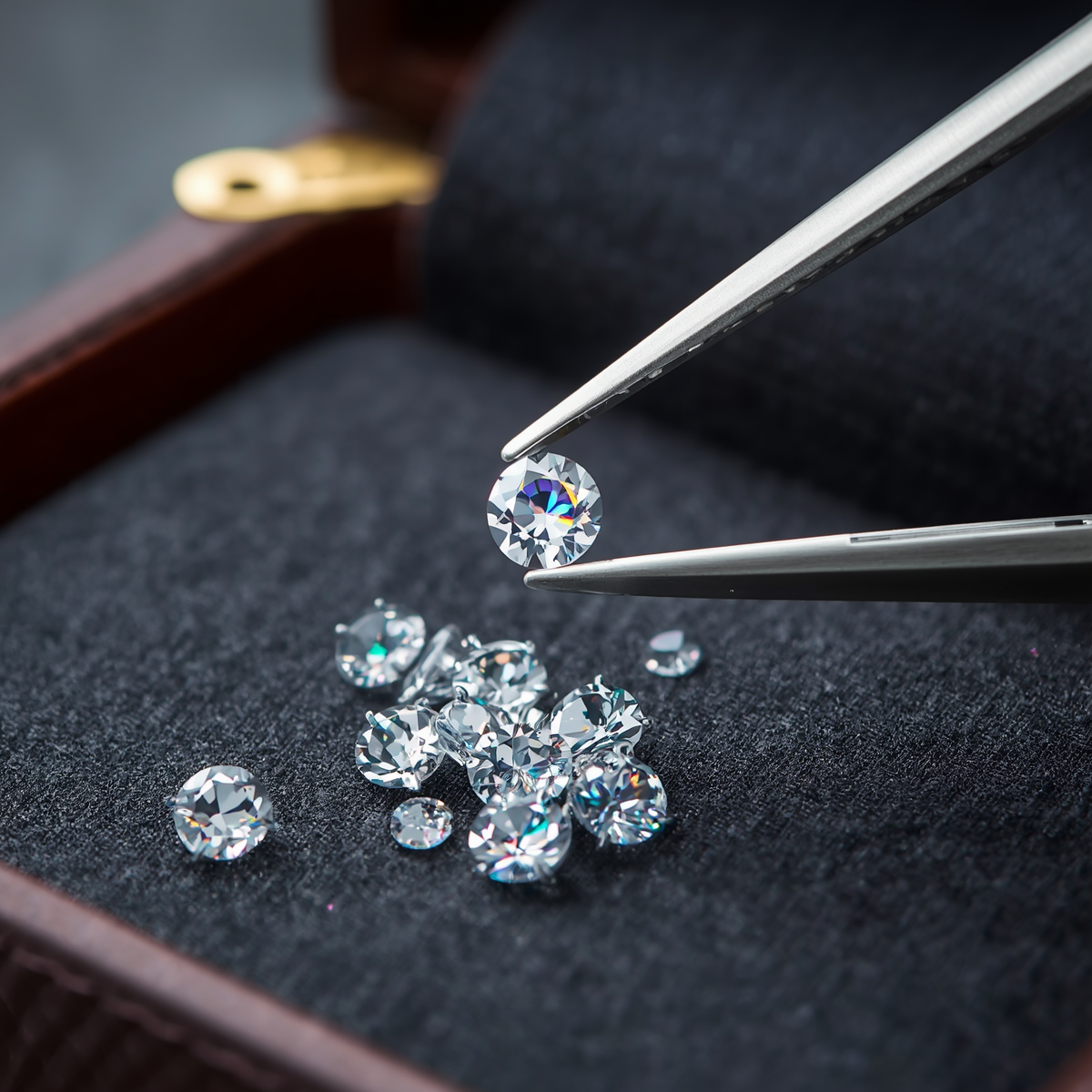
There is a specific, quiet thrill in the weight of a jewelry box. You feel the tension of the hinge, the velvet-lined interior catching the light, and then—the flash. For decades, that flash was reserved for those with the deepest pockets. But as the sun sets over a modern jewelry landscape, a new protagonist has emerged: the high-grade cubic zirconia.
To the uninitiated, “CZ” might evoke images of cloudy, plastic-looking stones in a bargain bin. But to the expert eye, a 5A-grade (AAAAA) cubic zirconia is a masterpiece of human engineering. It offers a cool, crisp weight in the hand and a prismatic dance of light that can make even a seasoned collector do a double-take. At Veyrael, we believe luxury is defined by craftsmanship and informed choices, not just rarity. Whether you are a designer sourcing wholesale or a savvy shopper looking for a “travel ring” that doesn’t compromise on elegance, understanding the nuances of this stone is essential.
What is Cubic Zirconia? The Science of the “Master Simulant”
Cubic zirconia is often misunderstood as a “synthetic diamond,” but in the world of gemology, those words have precise meanings. While a lab-grown diamond is chemically identical to one mined from the earth, cubic zirconia (zirconium oxide) is a diamond simulant. It is a unique material designed to mimic the look of a diamond without sharing its chemical DNA.
While natural cubic zirconia was discovered in 1937 as tiny inclusions within zircon crystals, the sparkling stones we see today are entirely lab-created, a process perfected in the early 1970s. It is a “Type I” clarity stone, meaning it is born nearly flawless—free from the “feathers” or “clouds” that tell the story of a diamond’s billion-year journey through the earth. Instead, it offers a clean, architectural brilliance that feels modern and purposeful.
The A to AAAAA Grading Secret: Why Quality Matters
When you step into the world of wholesale sourcing, you will encounter a grading system that separates the “costume” from the “couture.” Unlike diamonds, which use the GIA’s D-to-Z scale, cubic zirconia is graded from A to AAAAA.
| Grade | Typical Use | Visual Quality |
|---|---|---|
| A / AA | Art, embellishment, non-fine jewelry | Less sparkle, may appear slightly cloudy |
| AAA | High-street jewelry, everyday pieces | Good brilliance, minor polish marks under magnification |
| AAAAA (5A) | High-end, luxury-inspired fine jewelry | Maximum fire, precision cutting, virtually diamond-like to the naked eye |
Grade A and AA: The Artisan’s Choice
These stones are the workhorses of the art world. They are often less sparkling and may appear slightly cloudy because the “rough” material used is of lower quality. If you run your finger over the facets of a Grade A stone, the edges might feel blunt or rounded, lacking the sharp, tactile “bite” of a high-end gem. They are perfect for embellishing textiles or experimental art but fall short of the Veyrael standard for fine jewelry.
Grade AAA: The Market Standard
This is the most popular grade you will find in high-street jewelry departments. They are polished more carefully than Grade A stones and calibrated for height and symmetry. However, if you look through a jeweler’s loupe, you might still see faint “polish marks” or grain lines across the table of the stone.
Grade AAAAA (5A): The Pinnacle of Perfection
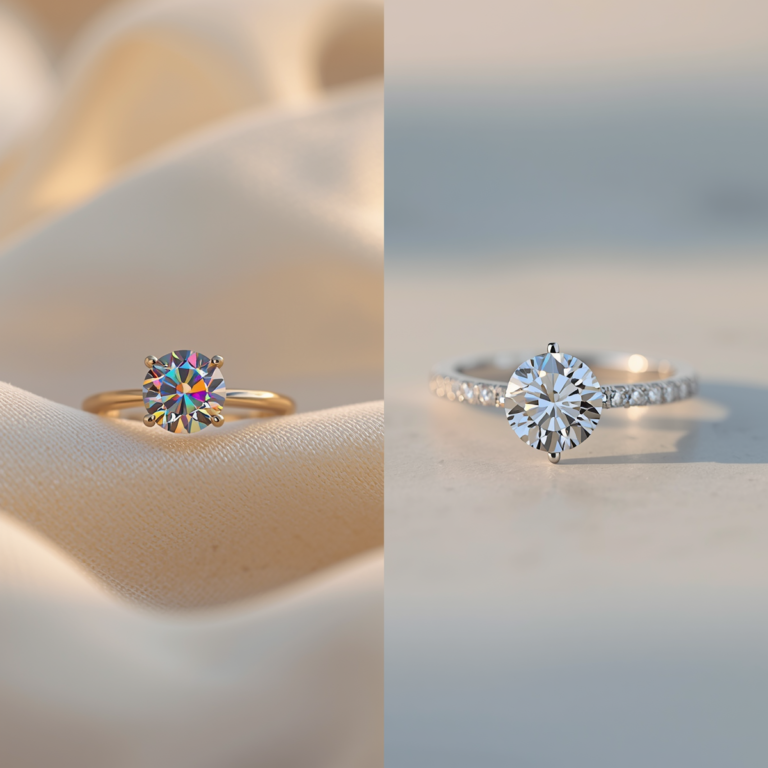
This is where the magic happens. A 5A-grade stone is crafted by master cutters using the finest rough material. These stones are cut and polished with the same obsessive precision as a top-tier diamond. They feature thin, symmetrical girdles and precise facets that maximize “fire”—the way light breaks into a rainbow spectrum as it travels through the stone. In a heavy gold or platinum setting, a 5A CZ is virtually indistinguishable from a diamond to the naked eye.
CZ vs. Lab Diamonds: Navigating the Choice
For the modern buyer, the choice often comes down to Cubic Zirconia vs. Lab-Grown Diamonds. The decision usually hinges on three pillars: Durability, Brilliance, and Intention.
Hardness and Longevity
A diamond is the hardest substance on Earth, a 10 on the Mohs scale. Cubic zirconia is no slouch, ranking between 8 and 8.5. While it is harder than many natural gemstones, it is more prone to scratching over years of daily wear. For an engagement ring intended to be passed down through generations, the diamond wins on resilience.
The “Prismatic” Fire
Interestingly, CZ has a higher dispersion rate than diamonds. This means it actually produces more rainbow flashes. To some, this “rainbow-like fire” feels magical; to a trained gemologist, it can look slightly “glassy” or artificial compared to the more subdued, elegant scintillation of a diamond.
Weight and Feel
One of the most tactile differences is density. Cubic zirconia is significantly denser than diamond. If you held a one-carat diamond in one hand and a CZ of the same size in the other, the CZ would feel noticeably heavier. There is a certain luxury in that weight—a physical reminder of the piece you’re wearing.
Practical Buying Advice: How to Test Your Gems at Home
If you are shopping for vintage pieces or want to verify a recent purchase, there are simple “home tests” to help you differentiate between a diamond and its simulant:
The Fog Test
Diamonds are incredible conductors of heat. Breathe on the stone as if you’re trying to fog up a window. A diamond will clear almost instantly, while a cubic zirconia will stay fogged for several seconds.
The Sharpness Test
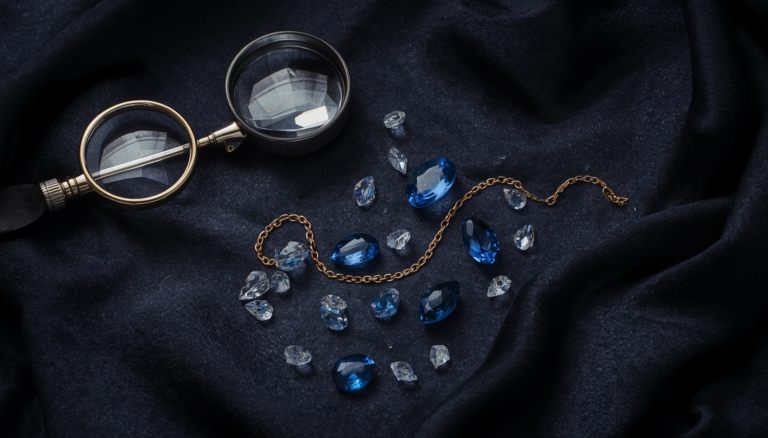
Use a magnifying glass to look at where the facets meet. In a diamond, the edges are razor-sharp. In most CZs (especially lower grades), the edges may look slightly rounded or “blunt”.
The Sunlight Hue
Take the stone into natural afternoon light. A high-grade diamond looks icy and crisp. Some CZs can exhibit a very slight bluish or overly rainbow hue when exposed to direct UV rays.
Inspect Your Jewelry Live
Want to check this piece for authentic hallmarks, facet alignments, or hidden inclusions right now? Use our complimentary digital macro tool on your smartphone.
Launch Live Mobile LoupeA Spectrum of Color: The Art of “Doping”
While the “white” or colorless stone is the most famous, the world of colored cubic zirconia is a designer’s playground. By “doping” the zirconium oxide with rare earth elements like neodymium or erbium, scientists can create a breathtaking array of hues.
Lavender and Violet: Often used as a tanzanite simulant, these stones capture that specific, velvety blue-purple shift.
Champagne and Pink: These “premium colors” often use more expensive rough material, resulting in a warmth that mimics rare fancy-colored diamonds.
Emerald Green: When done correctly, the saturation is deep and rich, providing the look of a fine Colombian emerald without the fragility of natural inclusions.
Caring for Your Collection
To maintain that “first-day” sparkle, your cubic zirconia requires a bit of mindfulness. Because they can develop a “cloudy” appearance over time as they accumulate microscopic surface scratches or oils, regular cleaning is key. Avoid harsh chemicals if your stones are coated, as this can strip the finish. A simple solution of warm water and mild soap, followed by a gentle buff with a microfiber cloth, will restore that signature brilliance.
Conclusion: The Veyrael Perspective
In the end, choosing a 5A cubic zirconia isn’t about “faking it”—it’s about smart luxury. It is the relief of the traveler who can wear a stunning “stunt” ring through a bustling Mediterranean market while their heirloom rests safely in a vault. It is the joy of the jewelry enthusiast who wants to experiment with bold, colorful trends without a five-figure investment.
By prioritizing Grade AAAAA quality, you aren’t just buying a simulant; you are buying a piece of scientific artistry that captures the light and reflects the brilliance of your own style.
Frequently Asked Questions (FAQ)
Is cubic zirconia “real”? It is a real, tangible gemstone made of zirconium oxide, but it is not a “real diamond.” It is a synthetic simulant designed to mimic a diamond’s appearance.
Will cubic zirconia turn cloudy? Lower-grade stones are more prone to clouding due to surface scratches and the accumulation of oils. However, high-quality 5A stones that are properly cared for can retain their brilliance for many years.
Can a diamond tester detect CZ? Yes. Most standard diamond testers measure thermal conductivity. Since diamonds conduct heat very differently than zirconium oxide, the tester will easily tell them apart.
What does “CZ” stamped on my jewelry mean? It is a transparency marker indicating that the stone is cubic zirconia, helping consumers distinguish it from natural or lab-grown diamonds.