The Karat Compass: A Masterclass in Gold Purity and Luxury Quality
Gold has remained the universal language of luxury for millennia, a shimmering constant in an ever-shifting world of fashion. Yet, for many collectors, the technicalities of gold—the difference between 18K and 14K, the mystery of European “750” stamps, and the science of skin sensitivity—remain as veiled as an unpolished gemstone.
At Veyrael, we believe that true luxury is rooted in transparency and education. Whether you are selecting a bespoke engagement ring or a timeless tennis bracelet, understanding the “Gilded Standard” of gold is the only way to ensure your investment maintains both its luster and its value. This guide navigates the intricacies of gold purity, helping you avoid low-quality alloys and invest in pieces that reflect your discerning taste.
Decoding the Karat: The Math of Brilliance
The most critical factor in any gold purchase is purity, and the jewelry industry utilizes a universal system to identify it: the Karat (K). While often confused with the “Carat” used for diamond weight, a gold Karat describes the percentage of pure gold within a specific item.
In its natural, unadulterated state, gold is 24-karat. However, 24K gold is rarely used for intricate jewelry because it is incredibly malleable and soft. To create pieces that can withstand daily wear, master jewelers’ alloy pure gold with other metals, such as copper, silver, or zinc, to enhance durability.
The Purity Spectrum: Which Karat is Right for You?
Choosing the right purity level is a balance between the rich, warm hue of high-gold content and the structural integrity required for your lifestyle:
This is gold in its most concentrated form. While it offers a deep, incomparable yellow glow, it is generally considered too soft for daily-wear jewelry like rings or bracelets.
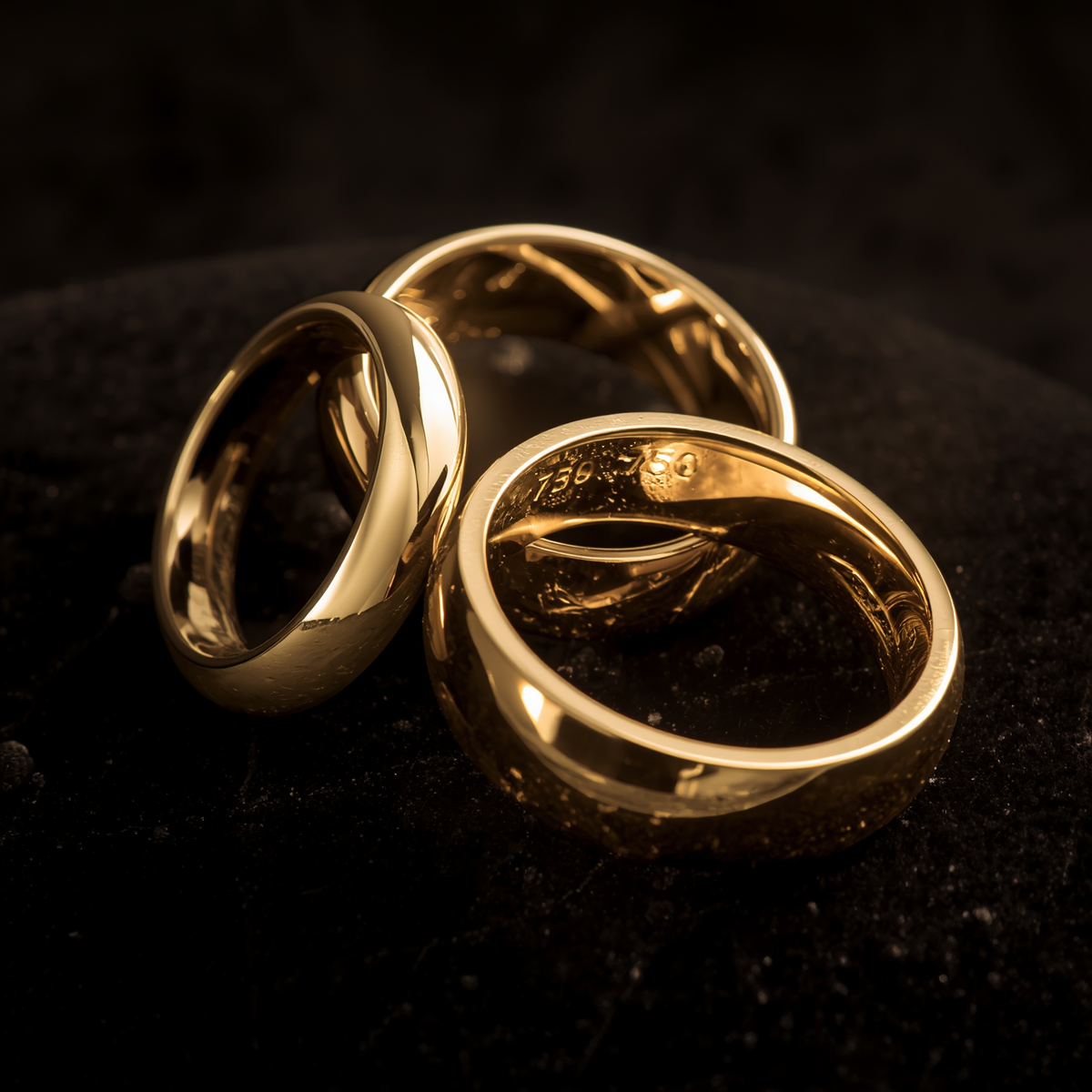
Often marked with the number 750 (indicating 750 parts gold per 1000), 18K is the hallmark of premium luxury. It contains 18 parts gold and 6 parts alloy, offering a rich color while providing enough strength to hold precious gemstones securely.
Marked as 585, this is the most popular choice for wedding and engagement jewelry in North America. It offers a beautiful balance of gold’s warmth and the incredible durability needed for a piece worn every single day.
Marked as 417, this is the minimum standard that can legally be called “gold” in the United States. While highly durable, its lower gold content results in a paler hue.
For a contrasting look at modern metals, explore The Titanium Truth: Why This Modern Metal Is the New Standard in Luxury Jewelry.
Beyond the Stamp: Identifying Authenticity and Craftsmanship
When you invest in high-end jewelry, the purity stamp is only half the story. To truly verify a piece’s pedigree, you must look for the hallmark or trademark. These symbols identify the maker and often the country of origin, serving as a signature of accountability.
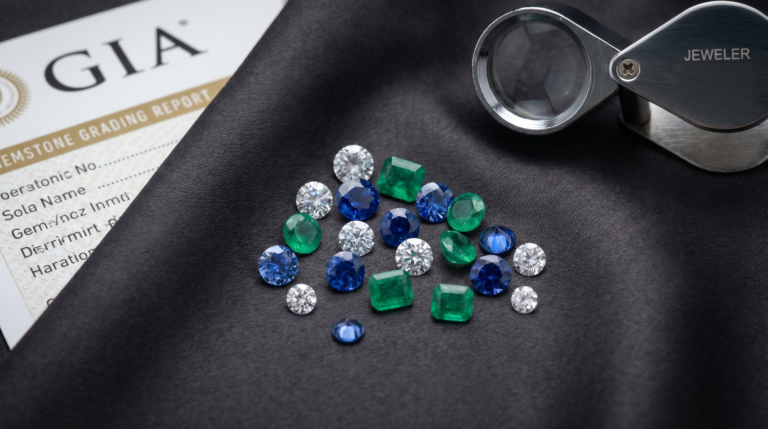
Top-tier retailers, such as those recognized by the Jewelers of America, adhere to a strict Code of Professional Practices to ensure that the metal you are buying matches its description. Furthermore, when buying gold that houses diamonds or colored gemstones, ensure the retailer provides certification from a reputable body like the Gemological Institute of America (GIA) to verify the quality of the set stones alongside the metal.
The European Difference: Understanding “Fineness”
If you are shopping with international designers or exploring vintage collections, you may not see “K” markings. Instead, European artisans use a decimal system based on 1,000 parts:
| Karat | European Mark | Meaning |
|---|---|---|
| 18K | 750 | 75.0% pure gold. |
| 14K | 585 | 58.3% pure gold. |
| 10K | 417 | 41.7% pure gold. |
Skin Sensitivity and the Mystery of “Gold Staining”
A common misconception is that gold jewelry that leaves a mark on the skin is “fake” or “low quality.” In reality, purer gold (18K and higher) does not tarnish or cause staining. If you experience a greenish or dark mark, it is often a biological reaction between your body’s chemistry—such as pH levels or the use of certain cosmetics—and the alloy metals (like copper or silver) mixed with the gold.
For those with known metal allergies, particularly to nickel, we recommend prioritizing high-karat jewelry. Pieces crafted in 18K or 22K gold have a significantly higher gold-to-alloy ratio, making them a much safer choice for sensitive skin.
The New Standard: Ethical and Repurposed Gold
In the modern luxury market, the origin of your gold is just as important as its purity. Discerning buyers now look for brands that prioritize responsible mining and sustainability.
Leading jewelers like Brilliant Earth have pioneered the use of repurposed (recycled) gold. By choosing gold that has been refined back to its original purity from existing sources, collectors can enjoy the same level of luxury without the environmental impact of new mining. Similarly, brands like Blue Nile focus on ethical sourcing and conflict-free standards to ensure that the beauty of your jewelry isn’t marred by its history.
Expert Advice: How to Buy Gold Without Regrets
- Match Karat to Lifestyle: If you are buying a delicate necklace for occasional wear, 18K is ideal. For an engagement ring that will be worn during exercise or work, 14K offers superior scratch resistance.
- Verify the Maker’s Mark: Never buy a piece that only has a purity stamp. A reputable jeweler will always include their trademark or hallmark.
- Think Long-Term: While 10K is more affordable, higher gold content (14K and 18K) holds its value better over time and is easier for jewelers to repair or resize.
- Prioritize Transparency: Shop with retailers who offer a “Lifetime Warranty” and clear return policies, ensuring your investment is protected.
Frequently Asked Questions
Does 18K gold scratch easier than 14K? Yes. Because 18K gold contains a higher percentage of pure gold, which is naturally soft, it is slightly more prone to surface scratches than 14K gold.
Why is 10K gold the minimum in the U.S.? U.S. consumer protection laws state that any metal with less than 41.7% gold (10K) does not have enough gold content to be legally marketed as “gold” jewelry.
Can I wear 24K gold every day? It is not recommended for items like rings or bracelets that encounter hard surfaces. 24K gold is soft enough that it can be easily dented or misshapen.
To compare gold with silver craftsmanship, see The Timeless Mystique of Sterling Silver Jewelry.
Conclusion: The Veyrael Verdict
Investing in gold is about more than just aesthetics; it is about finding a piece that resonates with your personal style and stands the test of time. By understanding the karat system, insisting on proper hallmarking, and choosing ethically sourced materials, you move from being a consumer to a true connoisseur. Whether it is the 75% purity of an 18K heirloom or the 58.3% resilience of a 14K wedding band, your gold should be as enduring as the memories it represents.