The Chameleon of the Urals: An Expert Buying Guide to Investment-Grade Alexandrite
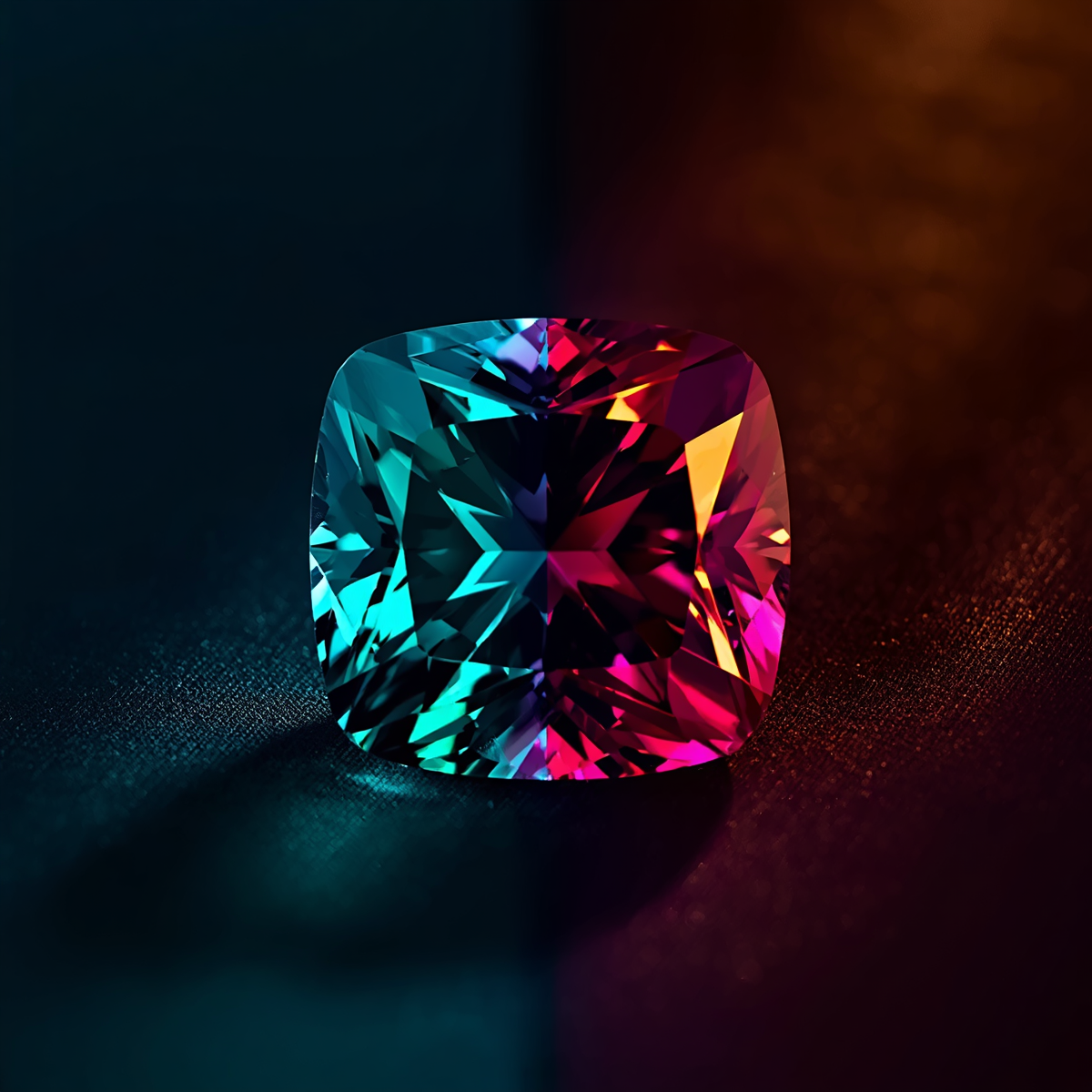
In the pantheon of fine gemstones, few possess the mercurial soul of Alexandrite. Often described by connoisseurs as “emerald by day, ruby by night,” this mineralogical tapestry is a geological miracle that defies the static nature of the earth.
To the high-end collector, an Alexandrite is far more than an ornament; it is a symbol of transformation—an elusive treasure representing one of the rarest intersections of chemistry and light. Its status as the “connoisseur’s gem” is well-earned, as its acquisition requires a sophisticated understanding of optical phenomena that few other minerals demand.
Beyond its captivating spectral interplay, Alexandrite serves as a definitive marker of a wearer’s personal brand. It is the ultimate conversation starter for the silent elite—those who value the complexity of nature over the ubiquity of traditional stones.
From an investment perspective, the landscape is defined by dwindling natural supplies and a persistent high demand that keeps values remarkably resilient. To understand this stone is to appreciate the very peak of mineralogical rarity, beginning with a discovery as dramatic as the gem’s own transformation.
I. A Royal Lineage: The Discovery and Heritage of Alexandrite
The history of Alexandrite is inextricably linked to the Imperial court of Russia. Discovered in 1830 within the emerald mines of the Ural Mountains by the Finnish mineralogist Nils Gustaf Nordenskiöld, the stone was initially mistaken for a high-quality emerald.
It was only when the sun set and the crystals were brought into the low-Kelvin warmth of an 18th-century salon that their true nature was revealed: the vivid green transitioned into a deep, purplish red under the flickering candlelight.
The gemstone was officially named in 1834 in honor of the future Tsar Alexander II. This royal christening was a masterstroke of prestige; the stone’s primary colors of red and green mirrored the military colors of Imperial Russia, instantly cementing it as the “Tsar’s Stone.”
This historical association continues to dictate the market today. A certified Russian Alexandrite carries an “Origin Premium” that transcends mere aesthetics, serving as a tangible artifact of imperial splendor. This legacy, however, is built upon a foundation of complex science.
To compare alexandrite’s mystique with other storied gems, explore The Eternal Brilliance: A Master Guide to Diamond History, Symbolism, and Curation.II. The Science of the “Alexandrite Effect”
The “magic” of Alexandrite is a sophisticated interplay between mineralogy and physics. As a variety of the mineral chrysoberyl (BeAl_2O_4), Alexandrite’s unique property arises from the trace presence of chromium (Cr). In the crystal structure, chromium ions absorb light in a specific way that allows the stone to shift its appearance based on the spectral balance of the ambient light source.
To evaluate an Alexandrite, one must observe it across various light conditions. It is important to note that modern LED lighting can produce varied results because of the wide range of available color temperatures.
| Light Source | Color Displayed |
|---|---|
Natural Sunlight / Fluorescent | Bright Green to Bluish-Green |
Incandescent / Candlelight | Red to Purplish-Red / Orange-Red |
LED Lighting | Green, Bluish-Green, or Purple (Variable) |
The most critical metric for a buyer is the color-change percentage. A “100% shift” signifies a total transformation across the entire body of the stone, representing the gold standard of value.
Stones that exhibit “bleed” (where both colors are visible simultaneously) or those that possess brownish secondary hues are significantly less desirable. In the world of high luxury, the purity of the green and the vibrancy of the red are the primary indicators of a “fine” specimen.
III. Global Origins: Mapping the Modern Market
While the Russian Ural Mountains remain the legendary source, the modern market relies on several key global deposits. Each region produces stones with distinct chemical and visual signatures:
- Russia (Ural Mountains): The nearly exhausted heritage source. Known for the most vivid, blue-green daylight colors and high-intensity shifts.
- Brazil (Minas Gerais): A major source of high-quality material. Expert gemologists have detected substantial amounts (up to 1,200 ppm) of the element Gallium replacing aluminum in Brazilian stones, a technical marker of their origin. They range from pale mauve to highly saturated teals.
- Sri Lanka (Ratnapura): Often produces larger stones that lean toward a deep olive-green in sunlight. While impressive in size, they often lack the crisp bluish-green of Russian material.
- Zimbabwe: A “secret” favorite among collectors. While Zimbabwean gems are rarely found in sizes exceeding 1.00 carat, they are celebrated for having the most intense and dramatic emerald-to-red shifts in the world.
The savvy investor must navigate the “Origin Premium.” A certified Russian stone can fetch a substantially higher price than a visually similar stone from Africa simply due to its historical cachet and rarity. For the connoisseur, heritage is a value-add that justifies the exponential increase in cost.
IV. The Veyrael Buying Guide: The Four Cs of Alexandrite
Evaluating Alexandrite requires a recalibration of traditional gemology, with “Color Change” reigning supreme.
- Color & Shift: This is the primary value driver. The closer the daylight color is to a pure emerald green and the evening color to a ruby red, the higher the valuation.
- Pleochroism: As a trichroic stone, Alexandrite displays different colors from different angles: deep red, orange-yellow, and green. A master cutter’s job is to orient the stone so that the secondary “orange-yellow” doesn’t muddy the primary shift, a feat of immense technical skill.
- Clarity: Unlike diamonds, slight inclusions are often tolerated due to extreme rarity. However, “eye-clean” stones are highly sought after. In rare instances, needle-like inclusions create chatoyancy or “Cat’s Eye Alexandrite,” an exceptionally valuable phenomenon.
- Carat Weight: Alexandrite follows an exponential price curve. Small accent stones are rare, but stones over one carat are considered major finds.
- Under 1.00 ct: Top-quality natural stones average $1,818 per carat.
- 1.00 – 1.99 ct: The price jumps significantly to $6,667 per carat.
- Note on Scale: For perspective, the largest polished Alexandrite in the world, housed in the Smithsonian Institution, weighs approximately 66 carats.
The Veyrael Trade-off Strategy: When curating a collection, prioritize the phenomenon over the size. A 0.50 ct stone with a 100% dramatic color shift is a superior investment compared to a 2.00 ct stone with a weak, brownish 20% shift. [Link to Veyrael’s Guide to Engagement Ring Settings]
V. Transparency in Luxury: Natural vs. Lab-Grown Alexandrite
Given the scarcity of natural material, the market includes several alternatives. It is vital for the discerning buyer to distinguish between them using a gemologist’s eye:
- Natural Alexandrite: Formed over millions of years; the only category with significant resale and heirloom value.
- Lab-Grown Alexandrite: Chemically identical to natural stones but grown in weeks. While beautiful for “accessible luxury,” they lack investment weight.
- Simulants: Often synthetic corundum (sapphire) treated to mimic the color change. These hold no value as Alexandrite.
A Gemologist’s Red Flag Checklist:
- Curved Striae: Look for these under a loupe; they are a hallmark of melt techniques (like the Czochralski method) used in lab growth.
- Liquid Inclusions/Bubbles: These “fingerprints” often indicate hydrothermal growth.
- Platinum/Seed Material: Tiny metallic flakes can suggest flux growth methods.
- The Price Trap: If a large, eye-clean stone is offered at a “bargain” price, it is almost certainly synthetic. [Link to Veyrael’s Lab-Grown vs. Natural Gemstone Analysis]
VI. Curating and Preserving Your Collection
With a hardness of 8.5 on the Mohs scale, Alexandrite is exceptionally durable—surpassed only by rubies, sapphires, and diamonds. This makes it a magnificent choice for daily-wear jewelry.
The Maintenance Protocol:
- Do: Use warm, soapy water and a soft-bristled brush for routine cleaning.
- Don’t: Avoid ultrasonic or steam cleaners. While the stone is hard, extreme heat or high-frequency vibrations can stress the crystal structure.
- Storage: Store Alexandrite in a separate soft pouch. It is hard enough to scratch most other gems, yet it can be scratched by the diamonds in your collection.
VII. FAQ: Expert Insights for the Discerning Buyer
1. Is Alexandrite rarer than Diamond? Yes. While diamonds are marketed as rare, the geological “miracle” required for Alexandrite—the convergence of Beryllium and Chromium—occurs much less frequently in nature.
2. Why is my June birthstone sometimes a pearl? Alexandrite was added as a modern alternative to the pearl in the 1950s. It offers a more durable and colorful option for those born in June who prefer a faceted gemstone.
3. Can I improve a stone’s color through heat treatment? Unlike sapphires or rubies, natural Alexandrite is typically untreated. There are currently no widely accepted treatments to enhance its color-changing properties; the beauty you see is entirely the work of nature.
VIII. Conclusion: The Legacy of the Chameleon
In a world increasingly dominated by synthetic perfection and mass production, Alexandrite remains gloriously unpredictable—a gemstone that refuses to look the same twice. Perhaps that is why collectors never truly own Alexandrite. They simply spend a lifetime chasing its next transformation.
For preservation techniques tailored to rare gemstones, see The Art of the Heirloom: A Masterclass in Jewelry Care and Gemstone Longevity.